
1 mg of diphenhydramine per pound of body weight, two to three times daily. Standard adult tablets are 25 mg.
| Dog weight | Dose | 25 mg tablets | Children's liquid (12.5 mg/5 mL) |
|---|---|---|---|
| 10 lb | 10 mg | — | 4 mL |
| 12 lb | 12.5 mg | ½ | 5 mL |
| 25 lb | 25 mg | 1 | 10 mL |
| 40 lb | 40 mg | 1½ | 16 mL |
| 50 lb | 50 mg | 2 | 20 mL |
| 60 lb | 60 mg | 2½ | 24 mL |
| 75 lb | 75 mg | 3 | 30 mL |
| 100 lb | 100 mg | 4 | 40 mL |
For dogs under about 12 lb, the liquid is the only practical form — a quarter of a tablet is neither accurate nor evenly mixed.
Read the ingredient list before the dose

This is the part that sends dogs to emergency clinics, and it has nothing to do with arithmetic.
The only acceptable active ingredient is diphenhydramine HCl, on its own.
| On the box | Safe for dogs? |
|---|---|
| Diphenhydramine HCl only | Yes |
| Phenylephrine or pseudoephedrine (decongestant, often "-D" products) | No — toxic |
| Acetaminophen (in combination cold products) | No — toxic to dogs, fatal to cats |
| Xylitol (sweetener in many liquids and chewables) | No — severely toxic |
| Alcohol (in some liquid formulations) | Avoid |
Products named for allergy relief or sinus congestion frequently contain a decongestant alongside the antihistamine. Children's liquids frequently contain xylitol. Neither is obvious from the front of the box, and both are genuinely dangerous rather than merely inadvisable.
Check the active and inactive ingredient panel on the specific package in your hand, every time you buy a new one.
Forms are different concentrations
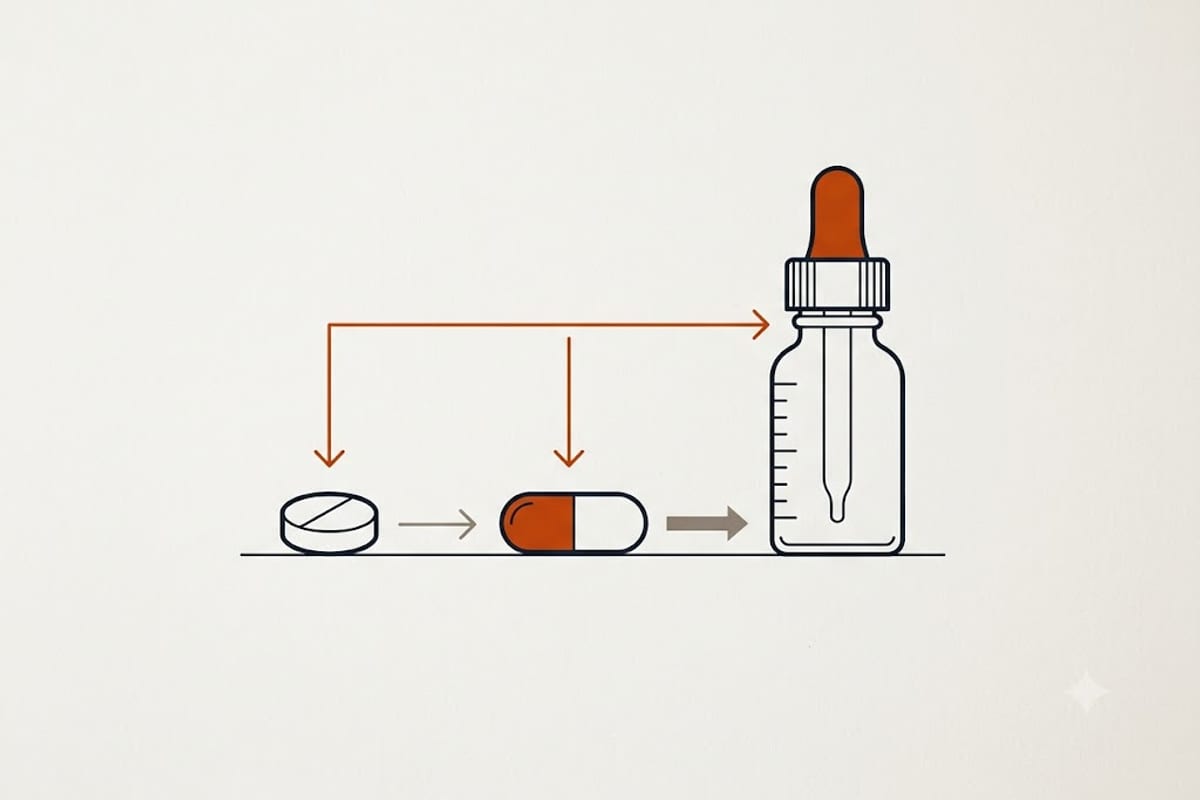
- Adult tablets: 25 mg
- Children's chewables: 12.5 mg
- Children's liquid: 12.5 mg per 5 mL
- Adult liquid gels: 25 mg, but often contain other ingredients — usually avoid
Never carry a millilitre or tablet count across from one form to another.
What it is reasonably used for
Mild seasonal itching, insect bites and stings, mild allergic reactions, and motion sickness on car journeys. Vets also use it before certain injections in dogs with a reaction history.
What it does not treat: skin infections, flea allergy without flea control, food allergy, or ear infections. Antihistamines are only moderately effective for canine atopic dermatitis, and a dog scratching persistently needs a diagnosis rather than a longer course of Benadryl.
When it should not be given without a vet
- Glaucoma, high blood pressure, cardiovascular disease
- Seizure disorders
- Prostatic hypertrophy or urinary retention
- Hyperthyroidism
- Pregnancy or lactation
- Puppies under 12 weeks
- Any dog on other sedatives or on MAO inhibitors
Facial swelling, hives spreading rapidly, vomiting, collapse, or any difficulty breathing is an emergency, not a Benadryl situation. Anaphylaxis moves faster than an oral antihistamine can act.
What to expect, and what overdose looks like
Sedation in 30 to 60 minutes, lasting 8 to 12 hours. A minority of dogs get the paradoxical opposite — agitation and restlessness — and in those dogs the drug is simply not useful.
Overdose signs: severe sedation or the reverse, rapid heart rate, dilated pupils, disorientation, tremors, seizures. That is a same-day emergency call.
Weigh the dog rather than estimating. A guess of "about 50 pounds" on a dog that is 68 is a 36% underdose, and in the other direction on a small dog it is worse. Current weight also drives the daily calorie figure, and body condition rather than the scale is what tells you the weight is right.
General reference reproducing widely published veterinary dosing. Not veterinary advice. Speak to your own vet before giving any human medication to an animal — they know the history, the other drugs, and the box in your cupboard.