A 40 lb neutered adult dog of average activity needs roughly 985 calories a day — about 2½ cups of a typical dry food at 380 kcal per cup.
Both halves of that sentence need checking against your own dog and your own bag, and the second half is the less reliable one.
Calories by weight
| Weight | Resting need | Neutered adult (×1.6) | Cups @ 380 kcal |
|---|---|---|---|
| 10 lb | 218 | 348 | 0.9 |
| 20 lb | 366 | 585 | 1.5 |
| 30 lb | 496 | 794 | 2.1 |
| 40 lb | 615 | 985 | 2.6 |
| 50 lb | 727 | 1,164 | 3.1 |
| 60 lb | 834 | 1,335 | 3.5 |
| 80 lb | 1,035 | 1,656 | 4.4 |
| 100 lb | 1,223 | 1,958 | 5.2 |
The resting figure comes from a standard veterinary formula:
RER = 70 × (weight in kg)^0.75
The exponent is why the column is a curve rather than a line. A 100 lb dog is 2.5 times the weight of a 40 lb dog and needs about twice the food, not 2.5 times. Metabolic rate scales with surface area, not mass.
The multiplier does more than the weight
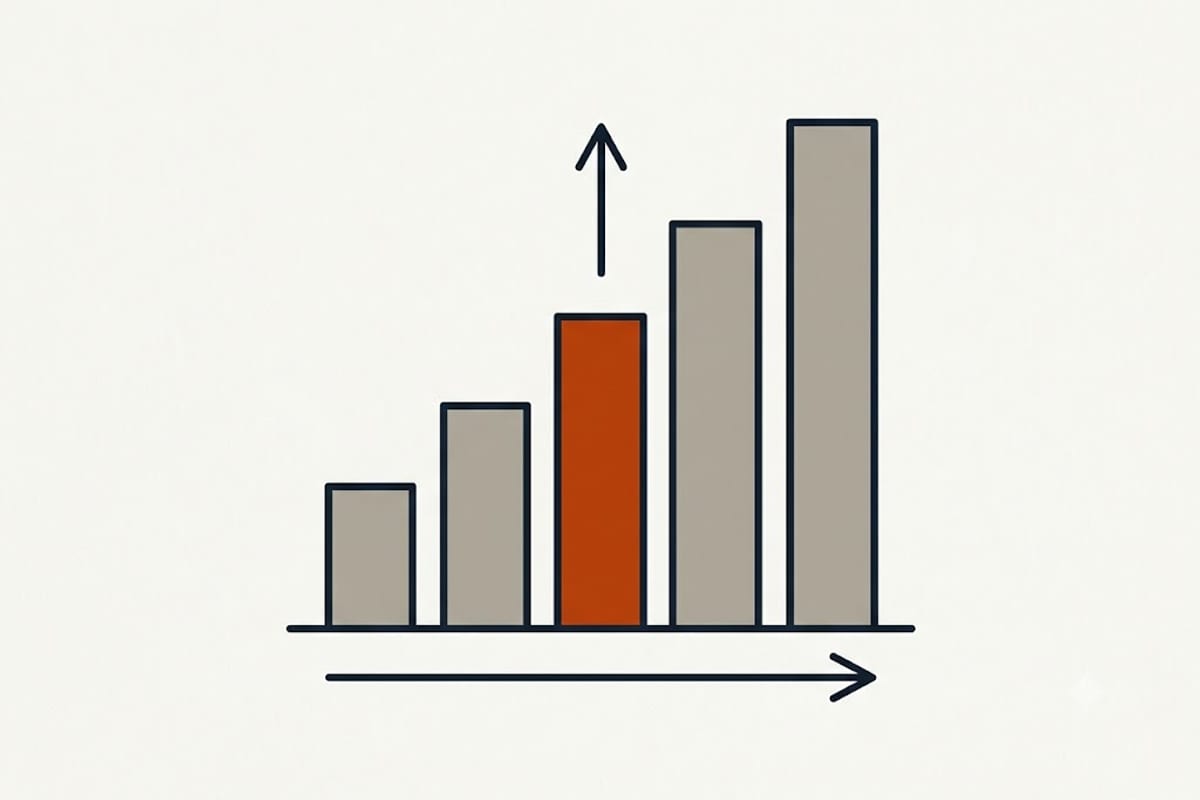
| Situation | × RER | 40 lb dog |
|---|---|---|
| Weight loss needed | 1.0 | 615 kcal |
| Senior, low activity | 1.2–1.4 | 738–861 |
| Neutered adult, typical | 1.6 | 985 |
| Intact adult | 1.8 | 1,107 |
| Very active / working | 2.0–5.0 | 1,230–3,075 |
| Puppy, under 4 months | 3.0 | 1,845 |
| Puppy, 4 months to adult | 2.0 | 1,230 |
Neutering lowers the requirement by roughly 20 to 30% and does so within weeks of the procedure. A dog fed the same amount before and after will gain, and this is the most common single cause of weight gain in pet dogs.
The gap between a sedentary senior and a working dog of identical weight is threefold. No printed feeding guide can know which one is standing in your kitchen.
Why cups are a poor unit
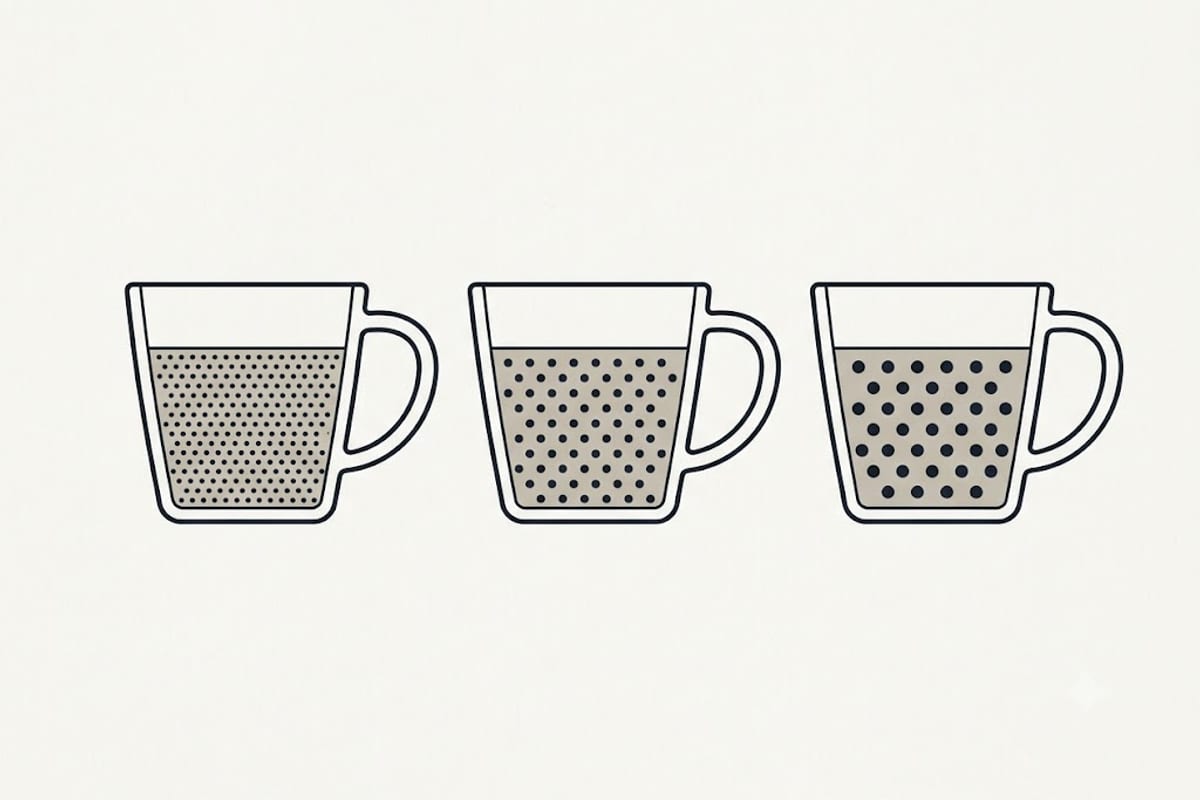
Dry foods range from about 300 to 600 kcal per cup. A cup of a dense performance food can carry twice the calories of a cup of a light senior formula.
That means "2½ cups" is meaningless without the food's calorie figure, which is printed on the bag as kcal/cup or kcal/kg, usually in small type near the feeding guide.
Do the division once:
daily calories ÷ kcal per cup = cups per day
Then measure with an actual measuring cup rather than a mug or a scoop. Better, weigh it — kibble settles, and a scooped cup can vary by 20%.
The bag's own guide runs high
Manufacturer feeding charts are generally built around intact, moderately active adults, which is the highest routine multiplier. For the majority of pet dogs — neutered, walked twice a day, sleeping the rest — they overshoot by 20 to 30%.
They also cannot account for treats, which routinely add 10 to 25% of daily intake unnoticed. Treats should stay under 10% of calories; on a 40 lb dog that is about 98 calories, which is roughly two medium biscuits.
The check that settles it
Feed the calculated amount for two to three weeks, then reassess body condition by hand: ribs felt easily under a thin covering, a waist visible from above, a tuck from the side. Adjust by 10% and wait another fortnight.
The scale confirms a trend; the ribs tell you the target. This is the same body condition scoring used to decide whether a dog inside its breed weight range is actually the right weight, and the current weight is also the input to any weight-based dose.