Male German Shepherds: 65–90 lb. Females: 50–70 lb. Height at the withers is 24–26 inches for males, 22–24 for females.
That is a forty-pound span across the breed, and a dog at either end can be perfectly correct. The useful question is not the number but whether this dog is the right weight for its own frame.
Growth by month
| Age | Male | Female |
|---|---|---|
| 2 months | 16–20 lb | 11–17 lb |
| 3 months | 22–30 lb | 17–26 lb |
| 4 months | 35–40 lb | 31–35 lb |
| 6 months | 49–57 lb | 44–49 lb |
| 9 months | 62–70 lb | 48–53 lb |
| 12 months | 71–75 lb | 55–60 lb |
| 18 months | 71–79 lb | 60–64 lb |
| 24 months | 79–88 lb | 66–70 lb |
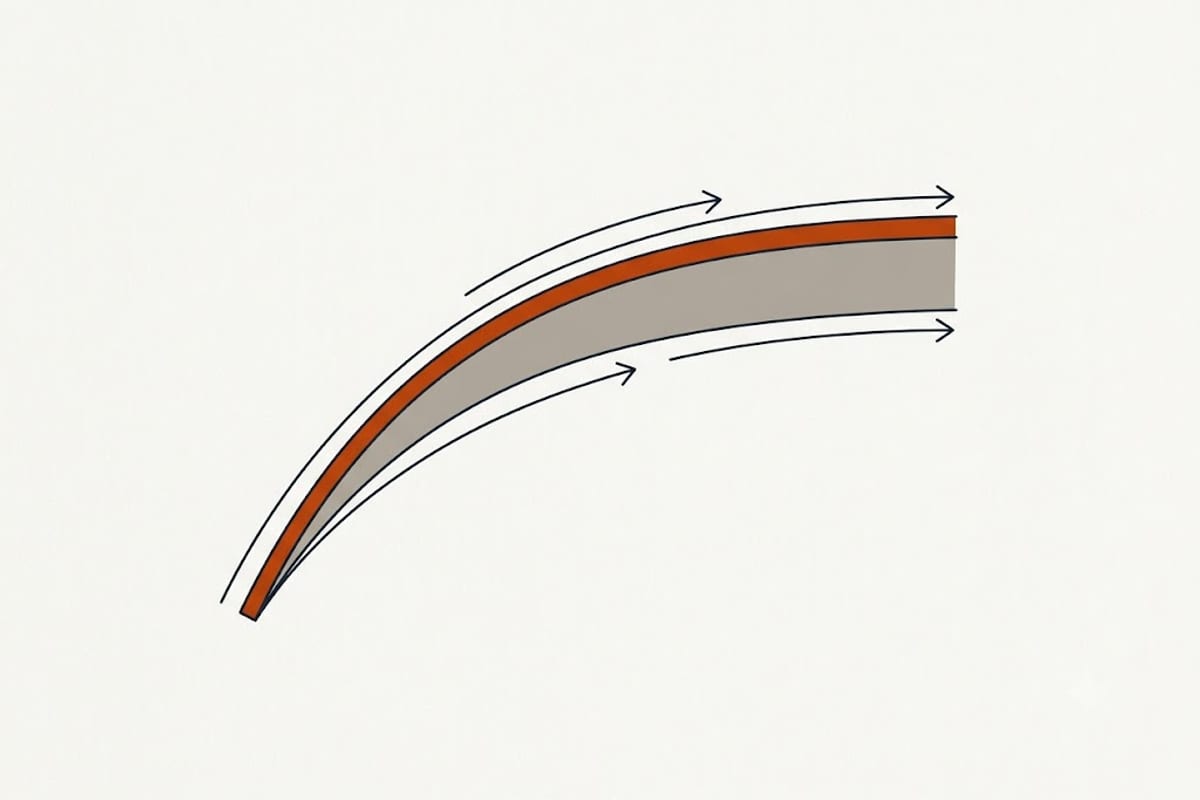
Most of the height arrives by 12 months; the remaining year adds chest depth and muscle rather than frame. A shepherd that looks lanky and unfinished at fourteen months is on schedule, and feeding harder to fill it out does not build bone — it adds fat to a skeleton that is still growing.
Large-breed puppies grow faster than their joints mature. Overfeeding during the growth phase is a documented risk factor for hip and elbow dysplasia, to which this breed is already predisposed.
The test that beats the scale
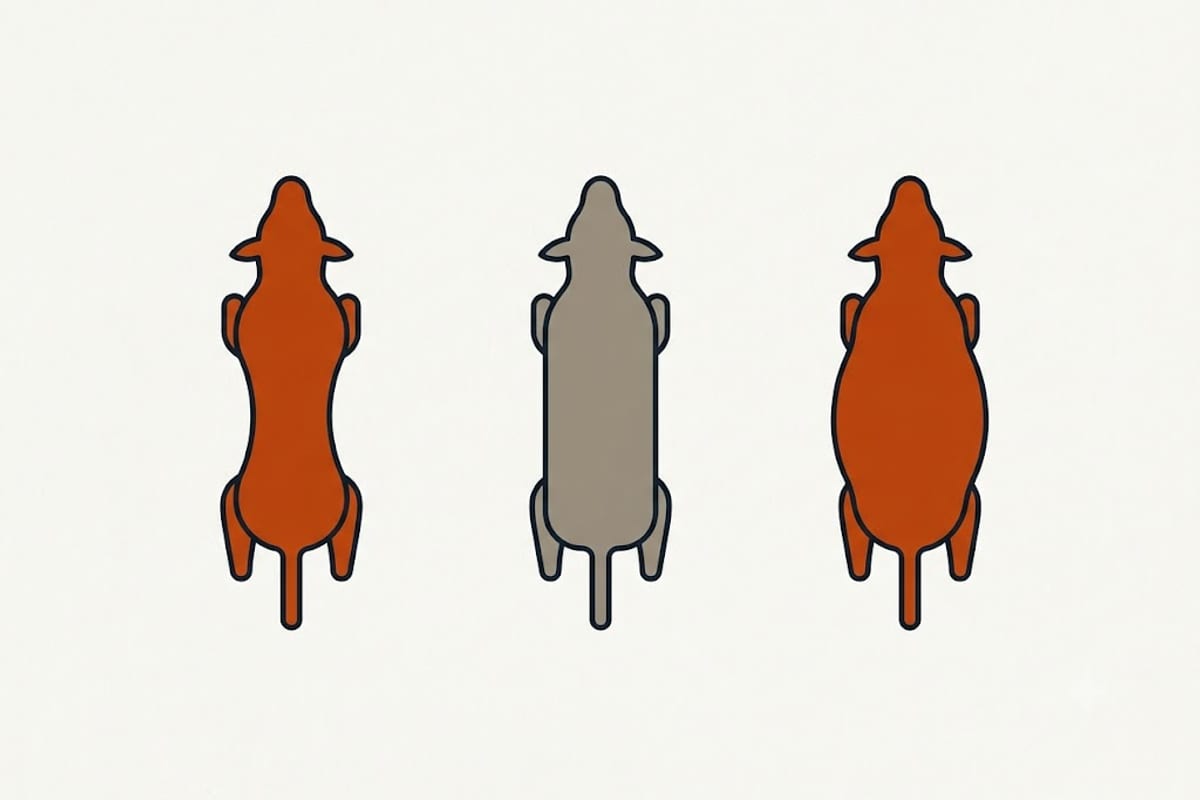
Body condition is scored 1 to 9. Ideal is 4 to 5, and it is assessed by hand, not by weight:
Ribs. Run flat fingers along the side. You should feel each rib with light pressure, covered by a thin layer, the way the back of your hand feels over the knuckles. If you have to press to find them, the dog is overweight. If they are visible from across the room, underweight.
Waist, from above. A clear narrowing behind the ribcage. No narrowing means overweight.
Tuck, from the side. The belly rises from the ribcage toward the hind legs rather than running level.
A 90 lb male with no waist and buried ribs is overweight despite being inside the breed range. A 68 lb male with a visible tuck and easily felt ribs is fine despite sitting at the bottom of it. Frame size varies more than the standard suggests, and working-line dogs are typically leaner and lighter than show-line dogs of the same height.
Where the breed range comes from
The AKC standard describes a dog built for trotting endurance: slightly longer than tall, deep-chested, with substance but not bulk. The weight range is a consequence of that build at the stated heights, not a target in itself.
Two divergences are worth knowing about:
Show lines are typically heavier-boned with more angulation, sitting in the upper half of the range.
Working lines are lighter and more athletic, commonly 65–75 lb for males, and a dog at 68 lb from working lines is not undersized.
Oversized "king" shepherds at 100–120 lb are outside the standard. The extra mass sits on the same joints and shortens the working life of hips that are already the breed's weak point.
When weight is a symptom
Sudden loss with a normal appetite, sudden gain without more food, or a pot-bellied appearance with thinning coat all warrant a vet visit rather than a diet adjustment. Thyroid disease, exocrine pancreatic insufficiency — to which German Shepherds are particularly prone — and Cushing's all present first as a weight change.
Once the target is set, the daily amount follows from it: calories are calculated from body weight, and so is any weight-based medication dose.